


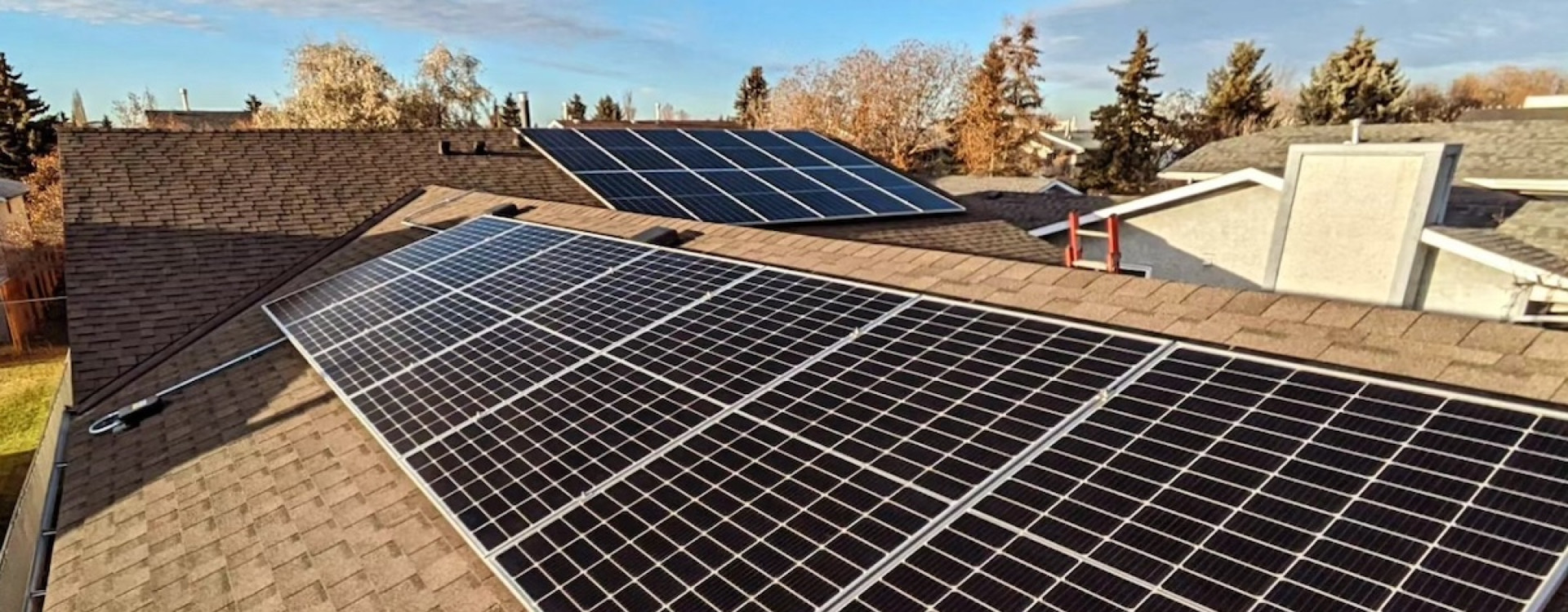
You’ve heard rumblings about carbon credits from green home owners throughout Central and Northern Alberta of late. You’ve heard that there is money to be made by leveraging a solar installation, yet have received little clarity on how to make that happen. Consequently, you’ve procrastinated on your own installation but have pledged to move forward in 2024.
Is it true that you can experience both greater energy efficiency while also putting money in your pocket via the carbon credits program? Absolutely. Below is a straightforward breakdown of everything you need to know.
What Edmonton and Northern AB Homeowners Need to Know About Leveraging Solar to Make Money from Carbon Credits
What Are Carbon Credits?
A carbon credit, also known as a carbon offset, is a tradable certificate that represents a one-tonne reduction in, or removal, of carbon dioxide or carbon dioxide equivalent (CO2e). Carbon credits can be generated from a variety of retrofits, but for the intent and purpose of this article, these credits will be earned from your forthcoming solar system.
How Many Carbon Credits Will My Solar System Generate?
Homeowners earn 1 credit for every 2,000 kilowatt-hour (kWh). What does that math look like for the average homeowner who invests in solar? The calculations get a little involved as the solar modules (aka solar panels) would produce energy from sunup to sundown with varying outputs depending on the intensity, sun angle, roof pitch, and inverter type. For the sake of this example let’s keep things very simple and say you’ve installed a premium panel that offers 500W and is getting 6 hours of direct sunlight per day so it can produce its maximum data plate rating of 500W/h. The individual solar panel’s daily output is approximately 3,000 watt-hours (in that 6 hour period), or 3.0 kilowatt hours (kWh) per day. That equates to 1,095 kWh of energy per year. A typical small installation would have about 14 solar panels which for this example would result in an annual production of 15,330 kWh. You can see how quickly this could add up!
Ultimately, carbon credit generation is contingent upon a number of factors. With an average of 325 sunny days and 2,345 sunshine hours per year, Edmonton homeowners enjoy greater carbon credit generation than those found in most cities and towns in the province and certainly the rest of the country. Differences are negligible throughout communities in Northern Alberta, as Fort MacMurray experiences an average of 2,089 hours and 306 days of sunshine per annum. You can view the data for your community here. Solar panel tilt also has an impact on carbon credit generation, so while you can’t do anything about what the weather does or doesn’t do, you can be more selective in which company you choose to manage your solar installation. BLDG Electric will work with you to optimize your solar system’s potential for carbon credit generation.
What Will My Carbon Credits be Worth?
Because carbon is a commodity, the market price is based on demand and supply. As the market price for carbon changes, your annual return from the program will adjust accordingly. In Alberta, a price of $65/tonne of CO2e has been set, and is
set to increase by $15 per year, reaching $170 per tonne CO2e in 2030.
Where Can I Sell My Carbon Credits and Make Money?
Carbon credits can be sold into Alberta’s compliance market under various programs. There are services available that will sell your carbon offset credits on the market for a commission. How do you connect to these services? Request a solar panel installation estimate from BLDG Electric today. In addition to installing and optimizing residential solar systems, we educate homeowners on how to leverage Alberta’s Carbon Offset Credit Platform to sell carbon credits.
How can you make money on carbon credits using your home’s upcoming solar installation? It all begins by getting an estimate from BLDG Electric.


